The results of a transient analysis on the physiotherapy transducer are shown below. The system was excited by a voltage pulse applied across the electrodes.
The animated structural deformation and static screen shots, at selected time steps, are shown below. These demonstrate that the voltage pulse first causes a uniform axial expansion on the piezoelectric disk, after which a wave of axial deformation is set up that travels radially in towards the axis of symmetry. On reaching the axis of symmetry the radial wave is ‘reflected’. The creation of the radial waves disrupts the pressure radiated into the acoustic medium.
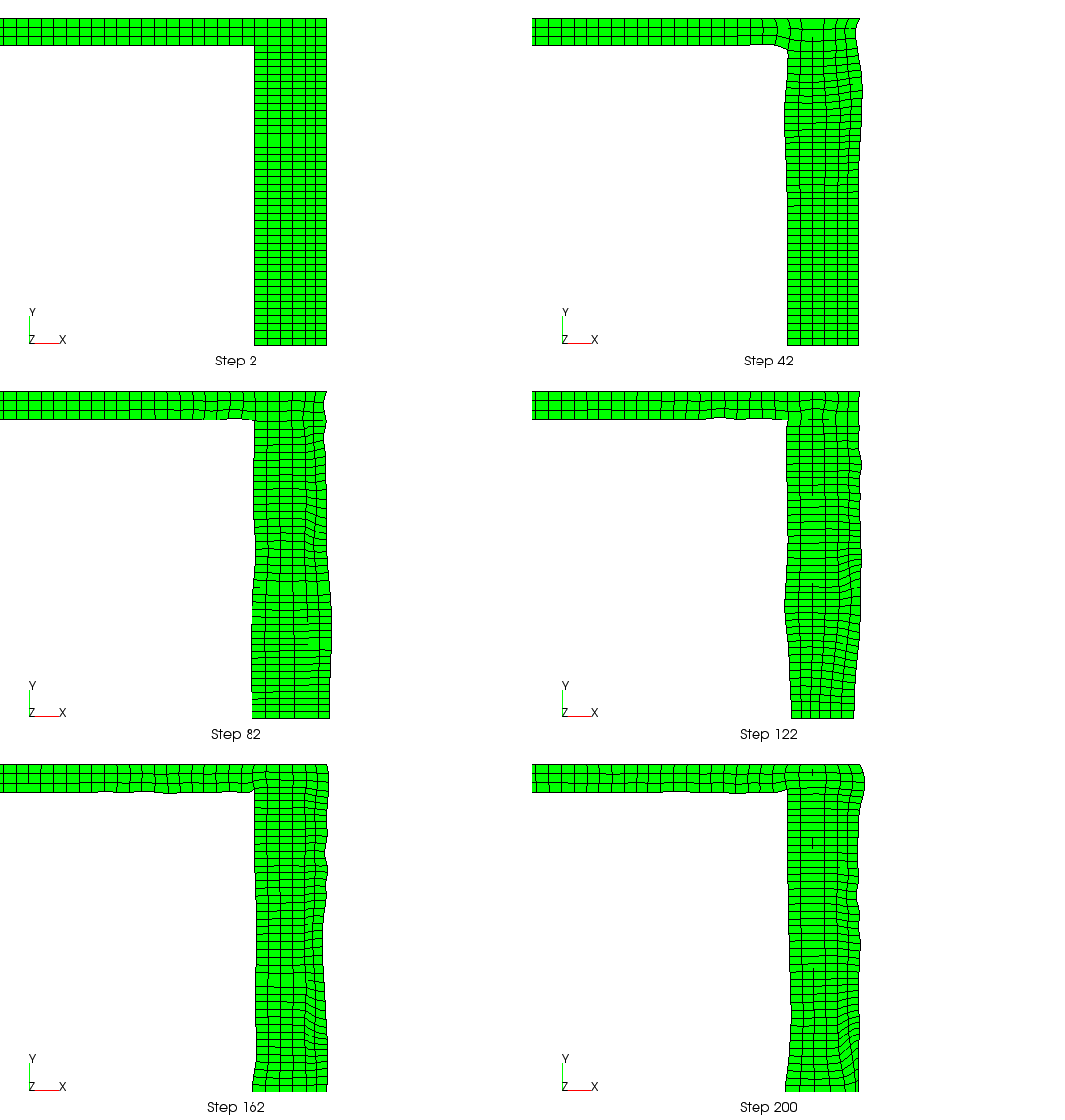
Animated transient structural deformation of physiotherapy transducer
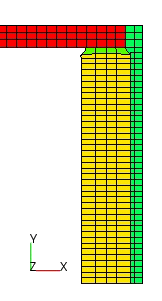 Step 2 |
 Step 34 |
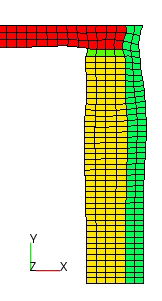 Step 54 |
 Step 110 |
| Step 2 | Expansion of ceramic disc axially. | |
| Step 34 | Compressional wave has travelled through the front matching layer to move the radiating surface forward. The shear wave is starting at the outer perimeter of the disc. | |
| Step 54 | Shear wave is part way towards the centre of the disc. | |
| Step 110 | After ‘relection’ of shear at centre. |
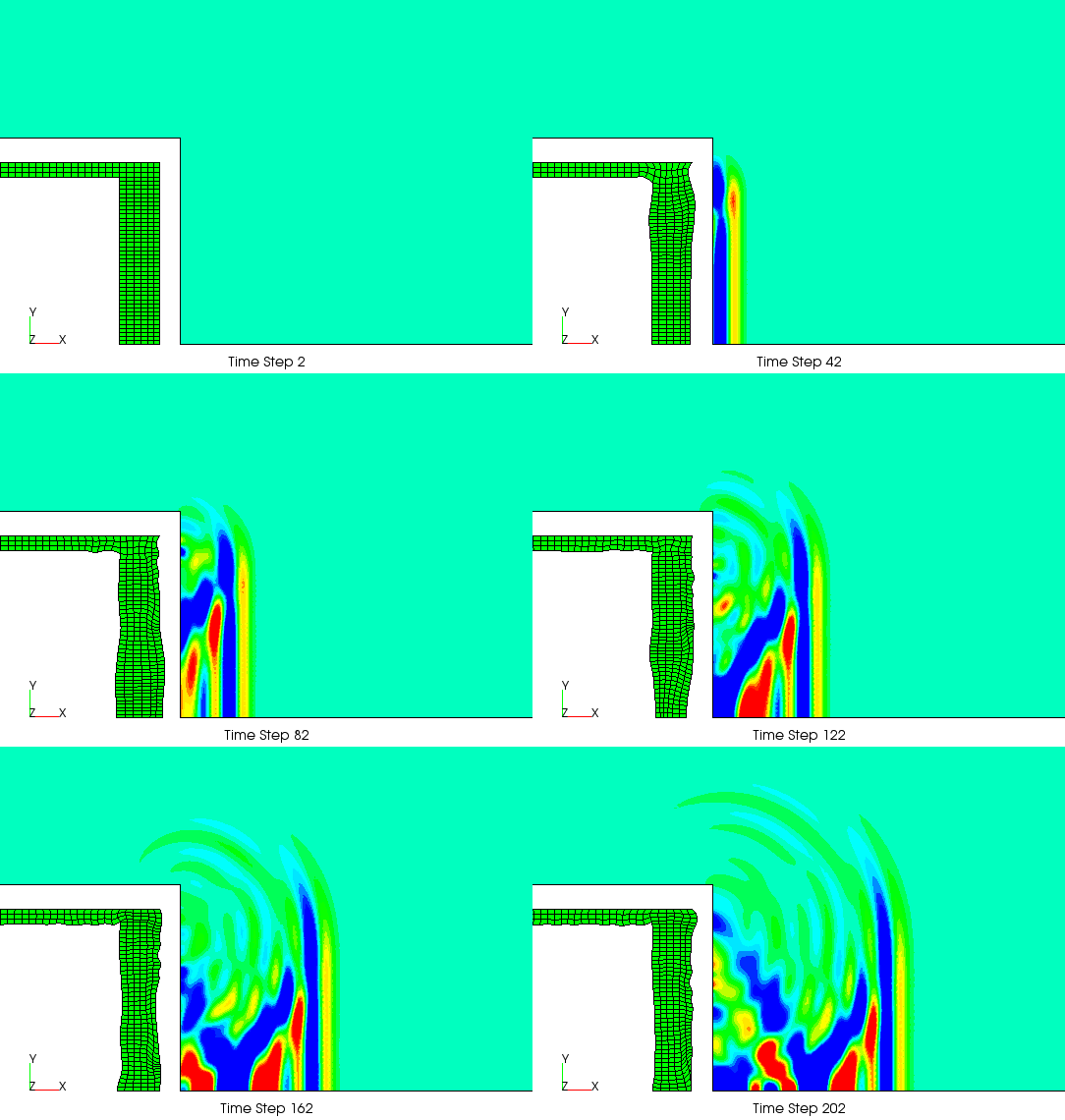
Animated transient deformed structure and pressure field in front of the radiating surface
Note: for clarity the structural mesh has been moved slightly to the left.